Qualify Real Estate Leads: Budget, Locality, Timeline, Intent in Order
By Abhishek Bharti, Founder of Genluno
Overview
If you are a new broker in Delhi NCR or Mumbai, the fastest way to waste a week is to call back every portal lead with the same open question: "Sir, which property are you looking for?" Most buyers go quiet. To qualify real estate leads properly, you need four specific answers, in a specific order: budget, locality, timeline, and whether they want to buy or rent. Get the order wrong and buyers feel interrogated before they trust you. This post covers how to qualify a property buyer using this exact sequence, with a sample WhatsApp script. Genluno, a WhatsApp AI sales rep for Indian real-estate brokers, already asks these four questions in this order after a buyer replies to the first message - you can read how the flow works on how it works.
Why do new brokers need to qualify real estate leads before calling them back?
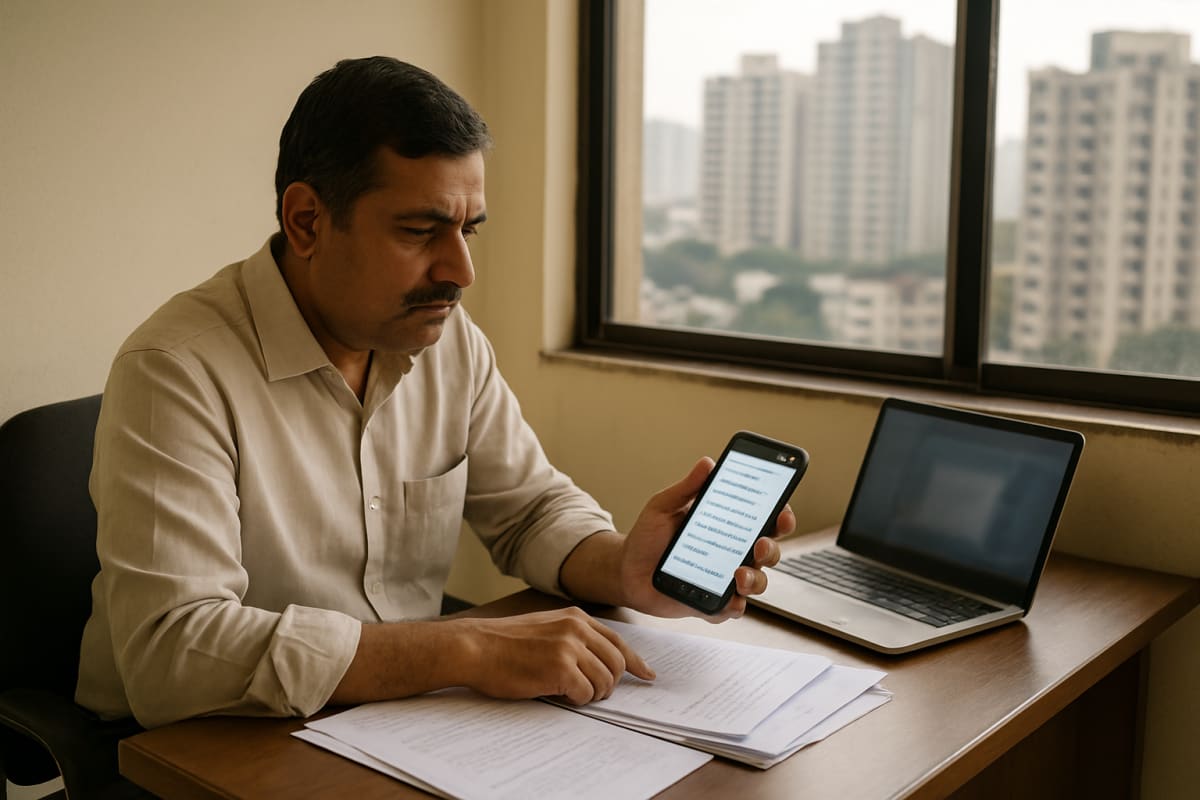
Qualifying means confirming budget, locality, timeline and buy-or-rent intent before you spend time on site visits or calls. Without this, a broker treats a ₹40 lakh renter enquiry the same as a ₹2 crore buyer ready this month, and ends up chasing the wrong lead first.
A portal lead email tells you a name, phone number and sometimes the listing a buyer clicked. It does not tell you if that buyer can actually afford the flat, whether they want that exact locality or just clicked out of curiosity, or if they are buying in the next few weeks or just browsing for next year. New real estate broker lead qualification habits often default to asking about the property itself first, which wastes a reply on a question the buyer cannot answer yet.
The four-question order that works, in sequence:
- Budget - confirms the buyer fits your inventory at all
- Locality - narrows the micro-market once budget is known
- Timeline - sets how urgently you should follow up
- Buy-or-rent - confirms the deal type once the basics are known
Consider a hypothetical: a broker in Ghaziabad gets five portal leads on a Tuesday morning from 99acres and Housing.com. If he calls all five with the same opening line, he might spend forty minutes on a buyer still six months away from deciding, while a buyer ready to visit this weekend goes to voicemail and books with someone faster. Qualifying portal leads India brokers receive from any of the ten major portals follows this same order, regardless of which site the lead came from.
Qualifying first means every subsequent conversation - the WhatsApp follow-up, the site-visit offer, the price discussion - is based on facts the buyer gave you, not assumptions. It also means you stop pitching properties that do not match budget or locality, which is a common reason buyers stop replying to brokers altogether.
Why does budget come before locality in the qualifying order?
Budget comes first because it quickly filters out mismatched properties and saves time on both sides. A buyer who can pay ₹60 lakh and one who can pay ₹1.5 crore need completely different conversations, even if they clicked the same listing on Dwarka Expressway.
Portal leads often come from a buyer browsing a listing that is above or below what they can actually spend - many just click to compare. Asking budget first, gently, tells you within one message whether this buyer belongs in your current inventory at all. These are the budget locality timeline questions broker teams in Delhi NCR and Mumbai ask every single day, and the order they get asked in matters as much as the questions themselves.
A practical WhatsApp line that works well: "To help you quickly, what budget range are you comfortable with - and is this a hard limit or flexible by a few lakh?" This does two things. It gets a number, and it tells you if there is room to negotiate upward, which matters a lot in Gurugram or Noida where project prices vary by tower and floor.
If you ask locality first instead, you might spend five messages discussing Sector 150 Noida only to find out the buyer's actual budget fits Greater Noida West, not Sector 150. Budget narrows the field before locality narrows it further, which is why this order saves both you and the buyer time. This is the first of several lead qualification questions real estate India brokers should ask before moving to locality - see what an automated WhatsApp flow covers on products.
Why does locality matter more than property type when qualifying a lead?
Locality narrows the search faster than property type because most buyers are flexible on configuration (2BHK vs 3BHK) but fixed on area, due to commute, school or family reasons. Confirming locality early avoids pitching the wrong micro-market entirely.
Once budget is confirmed, locality is the next filter because it rules out entire parts of a city in one answer:
- A buyer who says "only Thane, near the station" has just told you Mira Road or Navi Mumbai projects, even if cheaper, are not worth mentioning
- A buyer open to "anywhere along the Dwarka Expressway" has given you a wider net to work with
Asking locality before timeline matters because timeline without locality is meaningless - knowing a buyer wants to move in three months is not useful if you do not yet know whether they mean Kalyan or Mira Road.
A simple follow-up question after budget works well: "Got it. Which locality or area are you focused on, and is that fixed or are you open to nearby options too?" The second half of that question often reveals flexibility a buyer did not mention upfront, which can open up more of your listings. New brokers sometimes skip this and only ask "which project," which assumes the buyer already knows your inventory - locality is the broader, safer question to ask first.
Why does timeline come third, after budget and locality?
Timeline comes third because it tells you how urgently to act, but only after budget and locality confirm the buyer is a realistic match. A buyer ready "this month" but outside your budget or locality fit is not worth the same urgency as one who matches both.
Once you know what a buyer can spend and where they want to live, timeline tells you how to prioritise your day. A buyer planning to decide in the next few weeks deserves a site-visit offer today. A buyer who says "just exploring, maybe next year" still deserves a reply, but does not need the same follow-up frequency.
A useful way to ask this without sounding pushy: "When are you looking to finalise - this month, in the next few months, or just exploring for now?" Giving three options instead of an open question makes it easier for buyers to answer honestly, and it mirrors how automated WhatsApp flows for real estate typically offer three site-visit slots rather than asking an open-ended date.
Timeline also protects you from over-promising. If a hypothetical broker in Kalyan knows a buyer wants to move in within four weeks, he can focus on ready-to-move inventory instead of an under-construction project with a later possession date, which avoids a mismatched site visit entirely. Skipping this question, or asking it before budget and locality, means you cannot act on the urgency even if the buyer tells you - you simply do not yet know which properties are relevant to suggest for that timeline.
Why does buy-or-rent intent come last in the qualifying sequence?
Buy-or-rent comes last because budget, locality and timeline already narrow the lead enough that this final question confirms the deal type rather than reshaping the whole conversation. Asking it too early can make the chat feel like a form instead of a conversation.
By the time you know a buyer's budget, preferred locality and timeline, asking "are you looking to buy or rent" takes seconds and rarely surprises you - the earlier answers usually hint at it already. Buyer intent questions WhatsApp chats end with work best once the basics are confirmed: a buyer with a loose timeline and a locked family budget is often buying; a buyer who says "need to move in within two weeks" with a smaller monthly figure in mind is often renting.
Asking this question last also keeps the conversation feeling natural rather than like a checklist read out in order. A hypothetical WhatsApp sequence for a Mira Road lead might read: "What budget works for you?" then "Which part of Mira Road, East or West?" then "Looking to move in the next month or just planning ahead?" and finally "Is this for buying or for rent?" By this point the buyer has already shared three answers, so the fourth feels like a natural close rather than an interrogation.
This is also the order Genluno follows in its WhatsApp chat after a buyer replies to the first message - budget, locality, timeline, then buy-or-rent - before offering three site-visit slots from the broker's visit hours. You can compare this flow with other ways of handling leads on compare.
Frequently asked questions
Should a broker ask all four qualifying questions in one WhatsApp message?
No. Asking budget, locality, timeline and intent in one long message feels like a form and buyers often ignore it. Spacing them across the natural back-and-forth of a chat, in order, gets more complete and honest answers.
What if a buyer refuses to share their budget?
Rephrase it as a range question instead of an exact number, such as "is it closer to 60 lakh or closer to a crore" for Delhi NCR, or "is it under or above 1.5 crore" for Mumbai suburbs. Most buyers will confirm a range even if they will not state an exact figure.
Does locality mean the exact project name or the broader area?
Locality should mean the broader area first, such as Thane or Dwarka Expressway, not a specific project. Asking for the exact project assumes the buyer already knows your inventory, which is often not true this early in the chat.
How does an AI sales rep help new brokers qualify leads without extra typing?
Genluno replies to forwarded portal lead emails on WhatsApp in about 60 seconds and asks budget, locality, timeline and buy-or-rent in natural chat, in English, Hindi or Hinglish, mirroring the buyer's language. The broker only sees the qualified answers in the email alert, without typing the questions themselves.
Can a broker skip the timeline question if the lead email already mentions urgency?
It is still worth confirming directly, since portal lead emails rarely state a clear move-in date. A quick confirmation question avoids assuming urgency that was not actually stated by the buyer.
Where can a new broker read more about qualifying leads correctly?
Related topics like writing first WhatsApp replies and handling non-responsive leads are covered regularly under blogs.
Qualifying a real estate lead is not about asking more questions, it is about asking the right four in the right order: budget first to filter fit, locality second to narrow the area, timeline third to set urgency, and buy-or-rent last to confirm the deal type. New brokers who follow this sequence spend less time chasing buyers who were never going to convert, and more time on site visits that matter. Genluno is a WhatsApp AI sales rep for Indian real-estate brokers that replies to forwarded portal lead emails on WhatsApp in about 60 seconds, asks budget, locality and timeline, and offers site-visit slots.
Want your portal leads answered on WhatsApp in about 60 seconds? See Genluno work a live lead.
Book a demo →Keep reading
One Pipeline for 10 Portals: Stop Checking Five Inboxes
A broker on 3+ portals spends Monday morning logging into five separate dashboards to find leads that are already a day old. Here's what that audit looks like, and how to run one pipeline instead.
Real Estate Website Lead Form: Fields, Routing and a Fast Reply
Most website enquiry forms fail because of routing, not design - the form sits in a shared inbox nobody owns. Here's how to trim the fields, assign an owner, and get a fast WhatsApp reply going until automated routing catches up.
PropTiger Leads: From Enquiry to Site Visit
Builder-project channel partners get PropTiger leads for specific projects, but the enquiry email rarely spells out which one. Here's how to match the lead yourself, then let a 60-second WhatsApp reply handle the budget, locality and timeline questions before you offer a site visit.